 DT
Keto and intermittent fasting: should you combine them?
Keto and intermittent fasting can be combined, as they target different things: keto limits what you eat, and intermittent fasting limits when you eat. Nothing we read shows the combination is better than either one alone over the long term. It is also harder to sustain, so it's worth asking whether you need both.
Below are what each one means, a sample day, the risks and who should not try it. Written by the DT Nova team, the studio that makes FastTrack.
Medical note: This is general information, not advice for you. Ask a clinician before fasting if you are pregnant or breastfeeding, or have diabetes. The same goes for medication that must be taken with food, or a history of an eating disorder. If your fast is for a lab test, the instructions from whoever ordered the test override this page.
What each one does
| Ketogenic diet | Intermittent fasting | |
|---|---|---|
| Controls | What you eat | When you eat |
| Rule | Very low carbohydrate, very high fat | A set fasting window |
| Example | Under 50 g of carbs a day is commonly used | 16:8: eat 12:00 pm to 8:00 pm |
| Hard part | Very limited food choices | Hunger, and fitting in social meals |
Harvard's review of the ketogenic diet says the idea is that if you deprive the body of glucose, "an alternative fuel called ketones is produced from stored fat". Fasting and very low carbohydrate intake both push in that direction: it notes that "During fasting, or when very little carbohydrate is eaten, the body first pulls stored glucose from the liver". That's why people combine them, though a shared mechanism doesn't prove that doing both gives you a better outcome.
What the evidence says
We did not find strong long-term trials of the two together in the sources we read, so we'll only tell you what's reported for each.
- Keto. Harvard says: "Available research on the ketogenic diet for weight loss is still limited." It reports short-term benefits in some people, but says that "these effects after one year when compared with the effects of conventional weight loss diets are not significantly different."
- Intermittent fasting. Harvard's review says it's "unclear that intermittent fasting is superior to other weight loss methods".
So neither one has been shown to beat ordinary approaches over the longer term. Combining them doesn't change what those reviews found, so be skeptical of any big promises.
A sample keto and 16:8 day
Here is what the day could look like, using USDA figures. It's meant to show you how the arithmetic works, and isn't a meal plan.
- 7:00 am: black coffee and water.
- 12:00 pm: 2 eggs (155 calories, 13 g protein), 100 g avocado (160 calories) and broccoli.
- 3:30 pm: nuts or cheese, if you're hungry.
- 7:00 pm: 150 g salmon (309 calories, 33 g protein) and non-starchy vegetables with olive oil.
- 8:00 pm: fast begins.
Check your own carbohydrate count using a label or USDA data, since vegetables and sauces can add up. Avoid assuming that a food is low-carb because it's sold as "keto". Check the label.
- A keto day often relies on frequent small snacks of fat and protein.
- With 8 hours to eat, you might go from 3 meals and 2 snacks to 2 meals and 1 snack.
- That makes it easier to eat less, without meaning to.
- If you aren't trying to lose weight, that needs watching.
Which to start with, if you do both
Changing both at once makes it hard to tell which one is causing what. We'd suggest starting with only one, and adding the other if you still want it after a few weeks.
- Weeks 1 to 4: keep your normal food and try 14:10, then 16:8.
- Week 5: look at your energy, sleep and how often you're breaking your rules.
- Only if all that's fine, talk to a clinician about changing your diet as well.
- Stop adding things once you have a routine that's working.
Risks to take seriously
Harvard says symptoms of extreme carbohydrate restriction "may last days to weeks" and "include hunger, fatigue, low mood, irritability, constipation, headaches, and brain “fog.”" It also says that "Some negative side effects of a long-term ketogenic diet have been suggested, including increased risk of kidney stones and osteoporosis, and increased blood levels of uric acid". Possible nutrient deficiencies can arise if a variety of foods isn't included.
Fasting adds its own concerns, including hunger and, for some, disordered eating. Combining two restrictive rules may make that harder, which is why people with a history of an eating disorder should stay away from this combination. If you notice you're becoming anxious around food, stop and talk to someone.
Who should not combine them
- People with diabetes, especially on insulin or other glucose-lowering medication. Harvard's fasting review says those with diabetes should abstain. Harvard's keto review notes that ketoacidosis "most often occurs in individuals with type 1 diabetes". Never try this without your care team.
- People with a history of eating disorders. Both Harvard and Cleveland Clinic warn about this.
- People who are pregnant or breastfeeding, and adolescents. Harvard's fasting review says they should abstain.
- People who take medication that requires food.
- Anyone with kidney disease, gout or a history of kidney stones. Talk to your doctor before trying keto.
Water and electrolytes
Harvard describes the body excreting "ketone bodies along with body water in the urine" in ketoacidosis. That's a medical emergency, and it's different from normal diet changes, but many people on keto report that they need to pay more attention to fluids. The Cleveland Clinic fasting guide says to "Consider electrolytes", and to choose products without added sugars. Ask a clinician if you have high blood pressure, or heart or kidney disease. Our guide to how much water to drink has the reference figures.
One more practical point: a hungry first day on keto and a long fast can feel alike, so if you do combine them, you won't easily know which one is making you feel rough. That's another reason to change one thing at a time.
Do you need both?
Many people who like keto don't need a fasting window, and many people who like fasting have no need for keto. If what you want is a simple routine, one rule is easier to follow than two. The 16:8 schedule with ordinary balanced food is a simpler place to start, and it leaves more room for meals with others. To plan those meals ahead, see how to make a weekly meal plan with one shopping list.
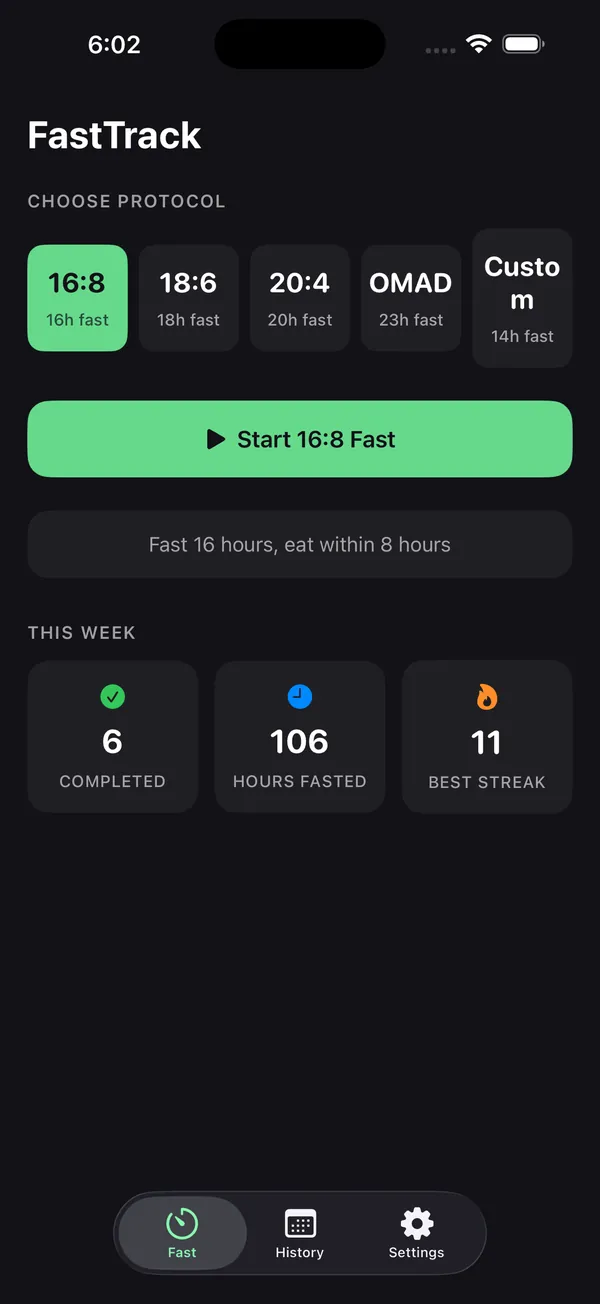
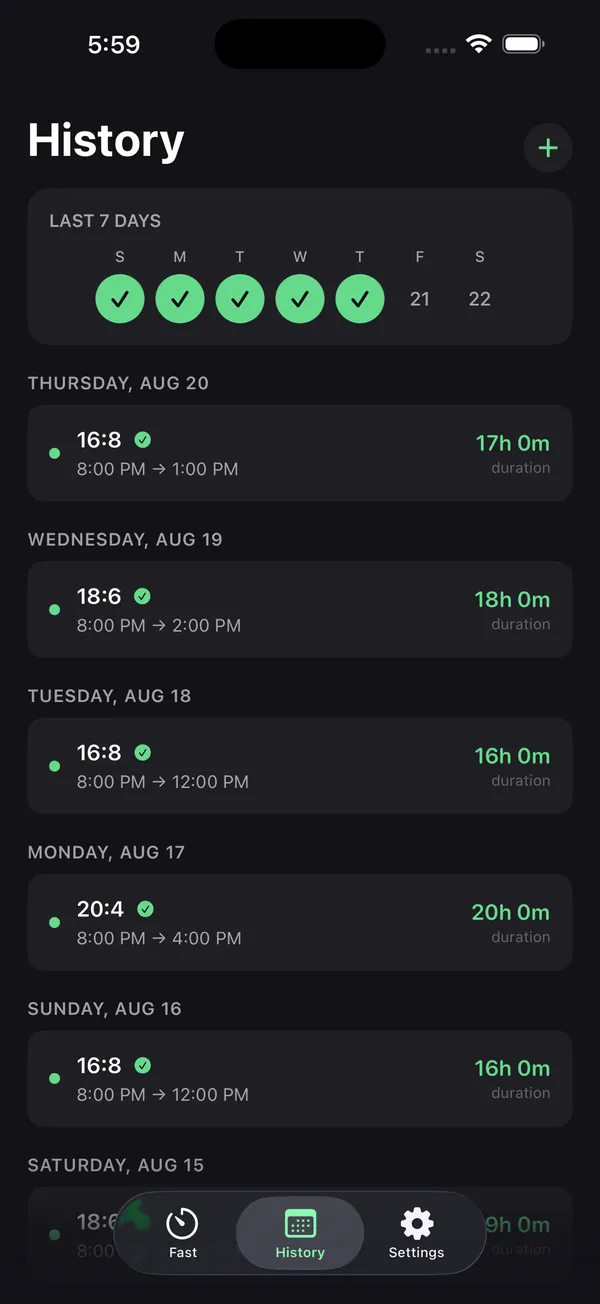
FastTrack tracks the timing part: it runs your window and doesn't track food or carbs, so it won't help with the keto side. You'd need another tool for that. Before you start, have a look at what breaks a fast, as butter coffee is a popular keto habit, and it does end a fast: see does coffee break a fast.
Questions people ask
Can you do keto and intermittent fasting together?
Yes, people do, because one limits what you eat and the other when you eat. We found no strong long-term evidence that it's better than either alone. It is more restrictive, so talk to a clinician first.
Does intermittent fasting help you get into ketosis faster?
Harvard's review says fasting and very low carbohydrate intake both make the body pull on stored glucose, and ketones are produced from stored fat. That doesn't show it improves your results. Be careful with claims about a specific timeline.
Is bulletproof coffee okay while fasting?
Not on a strict fast. Butter and oil are calories, and about 225 for a typical version by USDA arithmetic, as our coffee guide shows. Some keto plans allow it, but that's a plan rule, not a fast by the calorie test.
Who should not do keto and fasting together?
People with diabetes, a history of eating disorders, or kidney disease; people who are pregnant or breastfeeding; adolescents; and anyone on medication that needs food. Ask your care team first if any of this applies to you.
Sources
- Harvard T.H. Chan: Diet Review, Ketogenic Diet
- Harvard T.H. Chan: Diet Review, Intermittent Fasting
- Cleveland Clinic: Intermittent fasting, 4 different types
- USDA: Eggs, hard-boiled
- USDA: Avocado
- USDA: Salmon, cooked
Guides
- A 16:8 intermittent fasting scheduleA 16:8 intermittent fasting schedule with clock times for early risers, 9-to-5, night shifts and weekends, a 12:12 ramp-up week and what the evidence says.
- 18:6 intermittent fasting18:6 intermittent fasting means fasting 18 hours and eating in a 6-hour window. See sample schedules, how it compares to 16:8, and who should avoid it.
- 20:4 intermittent fasting20:4 intermittent fasting means fasting 20 hours and eating within 4. See sample schedules, how it differs from OMAD, the evidence and who should avoid it.
- Best foods to break a fastThe best foods to break a fast are ordinary: protein, fiber and whole grains. See three meals with USDA numbers, what to limit and long-fast cautions.
- Does bone broth break a fast?Does bone broth break a fast? Under a strict rule, yes: it has calories and protein. See USDA figures, how to read a carton, and when to drink it instead.
- Does coffee break a fast?Does coffee break a fast? An order-by-order table for black coffee, milk, latte, cream, bulletproof and sweeteners, with USDA calories and worked mornings.
- Does creatine break a fast?Does creatine break a fast? Plain creatine is unlikely to, but gummies, flavored powders and pre-workouts can. How to read the label and when to take it.
- Does gum break a fast?Does gum break a fast? Sugared gum does, and sugar-free gum is a gray area with a few calories and sweeteners. See the label math and what to use instead.
- Does lemon water break a fast?Does lemon water break a fast? A wedge is about 1 calorie and a whole lemon about 11. See the USDA table, strict and relaxed rules, and the lab exception.
- Does stevia break a fast?Does stevia break a fast? Pure stevia has almost no calories, but it is still a gray area and packets often hide fillers. How to read the label and decide.
- A fasting app without a subscription wallLooking for a fasting app without a subscription? What a free intermittent fasting tracker should include, the traps, and what FastTrack keeps free.
- Fasting before blood workFasting before blood work: which tests need it, the hours Labcorp, Quest and MedlinePlus give, and seven timelines from your last meal to the draw.
- Intermittent fasting calculatorA free intermittent fasting calculator: pick 16:8, 18:6, 20:4 or OMAD, enter your last meal, and see when your fast ends and your window opens.
- OMAD: one meal a dayOMAD means eating one meal a day and fasting 23 hours. What the trial really found, who should avoid it, a sample day and a plate with real numbers.
- A Simple fasting app alternativeLooking for a Simple fasting app alternative? Compare apps by their own listings, what you give up without a coach, and how to cancel and move across.
- What breaks a fast?What breaks a fast? Anything with calories, by the strict rule. See one table of drinks, sweeteners and supplements, plus what to do if you slip up.
- A Zero fasting app alternativeLooking for a Zero fasting app alternative? What Zero includes free and in Zero Plus, by its own App Store listing, next to FastTrack's free tier.